How to Use Thermal Imaging to Protect Your Commercial Panels
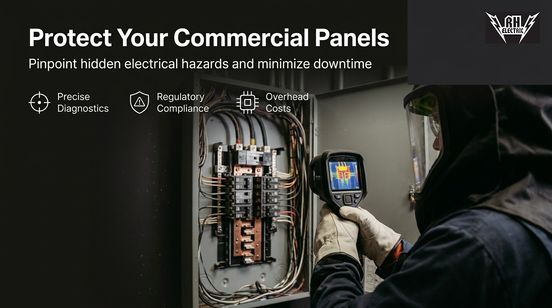
Operating a commercial facility requires constant vigilance over the infrastructure that keeps your business running. Electrical distribution equipment operates under continuous stress, handling fluctuating currents and demanding operational cycles. When hidden components begin to deteriorate, standard visual inspections often fail to identify the early warning signs of thermal fatigue, loose terminations, or internal equipment degradation. A sudden disruption inside your main distribution center can halt critical machinery, destroy sensitive digital infrastructure, and place personnel at immediate risk.
Unexpected power interruptions translate directly into expensive operational delays, missed client deadlines, and severe balance sheet losses. Undetected resistance within switchgear or panelboards generates abnormal thermal output long before a circuit breaker trips or a fuse blows. Without proactive diagnostic verification, these thermal anomalies continue to escalate under standard operating conditions until catastrophic mechanical failure occurs. The financial impact extends far beyond immediate equipment replacement, encompassing lost revenue, emergency service premiums, and substantial property loss.
Implementing an advanced diagnostic strategy allows you to gain comprehensive oversight of your facility's internal power infrastructure without interrupting daily workflows. Incorporating commercial thermal imaging provides a reliable, non-destructive method for evaluating switchgear, distribution enclosures, and motor controls while they remain fully operational under normal load. By adopting non-invasive diagnostic scanning as a core maintenance protocol, you establish an objective baseline of mechanical health, identify latent component stress, and protect your commercial enterprise against severe electrical casualties.
The Operational Mechanics of Infrared Electrical Testing
Infrared diagnostic technology operates on the foundational principle that electrical current flowing through physical components encounters intrinsic resistance. Whenever an electrical connection loosens, experiences corrosive oxidation, or suffers from internal contact degradation, localized electrical resistance increases substantially. This increased resistance generates localized heat in direct proportion to the square of the electrical load. Thermographic cameras detect this emitted infrared radiation, converting thermal signatures into visible, calibrated radiometric images that reveal heat gradients across your electrical infrastructure.
During an active evaluation, certified technicians inspect panelboards, distribution sub-panels, busway connections, and disconnect switches while the circuits remain energized and under standard working load. Attempting to measure thermal resistance on de-energized hardware provides misleading or entirely inaccurate information, because current flow is required to expose underlying resistance problems. Utilizing specialized thermal cameras calibrated to detect subtle temperature variations across small surfaces ensures that even micro-watt thermal anomalies become immediately apparent.
The quantitative data produced during a diagnostic scan enables precise temperature rise calculations. By comparing an anomaly against adjacent phases carrying comparable loads, technicians calculate relative temperature rises according to established industrial testing specifications. These specific comparative differentials indicate whether a component requires routine monitoring, prioritized scheduled repair, or immediate emergency intervention. Having this exact thermal documentation removes guesswork from your maintenance planning and provides definitive proof of equipment condition.
Integrating regular thermographic evaluations into your facility strategy transforms maintenance from a reactive scramble into an orderly operational discipline. Instead of responding to burnt insulation, melted lugs, or scorched breakers after an outage occurs, you identify the physical decay months prior to system failure. This diagnostic clarity establishes complete transparency across your electrical room, ensuring every panelboard operates within its intended engineering tolerances.
Identifying Severe Commercial Panel Maintenance Risks
Electrical distribution systems host a wide variety of mechanical and environmental vulnerabilities that degrade hardware reliability over time. When you oversee a facility, your commercial panel maintenance routine must target specific failure modes known to trigger high-heat events. Recognizing these hidden hazards helps your facility engineering team address localized defects before they cascade into multi-panel failures.
- Loose Mechanical Terminations: Ongoing thermal expansion cycles, continuous building vibration, and improper initial torque specifications often cause terminal lugs to back off over time. This loose physical interface restricts current flow, creating sharp resistance spikes and extreme thermal output directly at the conductor termination point.
- Unbalanced Multi-Phase Loads: Uneven distribution of single-phase loads across three-phase distribution systems leads to excessive current flow on neutral conductors and single phases. Thermographic scans identify phase imbalances instantly, showing conductors running significantly hotter than their paired lines.
- Internal Breaker and Switch Contact Degradation: Internal silver-plated contacts inside molded case circuit breakers and fusible switches deteriorate from repeated cycling or minor arcing. Because these contacts reside inside sealed enclosures, thermographic analysis provides the only safe, non-destructive window into their operational integrity.
- Undersized Conductors and Severe Overloading: Operational expansions often add new electrical equipment to existing circuits without upgrading distribution feeder cables. Infrared inspections reveal uniform overheating along entire conductor runs, indicating steady-state current values that exceed continuous ampacity ratings.
Each of these conditions presents a direct threat to your physical facility and ongoing business continuity. Ignoring subtle temperature rises permits insulating jackets to become brittle, exposing bare conductors to ground faults and dangerous phase-to-phase short circuits. Proactive detection ensures small mechanical corrections replace catastrophic panel replacements.
Extending Asset Lifespans and Eliminating Unscheduled Downtime
Every commercial electrical installation represents a substantial capital investment designed to function reliably across decades. However, excessive heat is the single greatest accelerator of insulation breakdown, contact wear, and mechanical fatigue within distribution equipment. Operating panelboards above their rated thermal thresholds degrades internal dielectric materials, embrittles plastic assemblies, and severely diminishes the service life of expensive switchgear.
Unscheduled electrical outages introduce acute operational paralysis for any commercial enterprise. Modern industrial controls, enterprise server arrays, refrigeration equipment, and manufacturing lines require consistent, clean power. When a distribution panel experiences an explosive arc fault or thermal breakdown, the resulting downtime ripples across your entire organization. Sourcing specialized commercial replacement components, waiting for site delivery, and executing emergency field rebuilds routinely requires days or even weeks of idle operations.
Employing thermographic analysis within your facility schedules preserves equipment health by identifying thermal stress before irreversible metallurgical changes occur. Correcting a loose bolt, cleaning an oxidized contact pad, or re-torquing a terminal connection restores normal resistance levels and returns operating temperatures to factory specifications. This targeted care extends the functional service life of your infrastructure and prevents prematurely exhausting capital on panel replacements.
Furthermore, scheduled preventive repairs eliminate the chaos and steep financial premiums associated with after-hours emergency electrical service calls. By spotting potential failures well in advance, you can coordinate necessary maintenance shutdowns during off-peak windows or planned plant turnarounds. This planned approach keeps your daily productivity intact while safeguarding your equipment investment.
Compliance, Safety, and Commercial Insurance Standards
Facility management requires strict adherence to regional safety regulations, electrical codes, and property insurance mandates. Major commercial property underwriters consistently recommend or require routine non-destructive thermal evaluations as a condition of property coverage. Insurance adjusters understand that electrical failures remain a leading cause of catastrophic structural fires in industrial and commercial properties.
Providing comprehensive thermal diagnostic reports demonstrates to municipal safety regulators and commercial insurers that your facility maintains high standards of risk reduction. Insurance carriers frequently offer favorable policy terms, lower deductibles, or reduced annual premiums when you present verified thermographic audit documentation. Conversely, a failure to demonstrate due diligence regarding panel health can complicate claim settlements following an electrical fire.
Beyond insurance compliance, thermal inspections protect the personal safety of employees and service personnel who interact with your power distribution equipment. Severely overheated terminations significantly increase the risk of arc flash events. An arc flash releases intense radiant heat, pressure waves, and toxic vaporized metal, presenting severe life-safety risks to anyone working nearby. Verifying the thermal stability of enclosures lowers the likelihood of explosive electrical failures.
Establishing an unbroken chain of inspection records creates clear legal and regulatory accountability. Detailed diagnostic documents show that your enterprise adheres to industry standard safety practices and systematically works to mitigate industrial hazards. This clear paper trail proves your organization takes electrical safety seriously and works to maintain a secure, compliant work environment.
Establishing a Structured Diagnostic Inspection Schedule
To capture the full protective value of thermographic testing, you must structure inspections into an ongoing, disciplined preventive maintenance protocol rather than viewing them as a sporadic, one-time exercise. Electrical loads vary by season, production volume, and building occupancy, meaning a single snapshot does not reveal the entire operational profile of your system. Developing a reliable schedule guarantees consistent equipment evaluation across different operating conditions.
Begin by establishing a complete inventory of every critical electrical asset within your physical plant. Your baseline registry must categorize high-voltage switchgear, primary step-down transformers, main service entrances, motor control centers, and regional distribution sub-panels. Prioritize equipment based on business criticality, assigning the highest inspection frequency to switchboards that would cause widespread operational shutdowns if they failed.
Execute comprehensive infrared evaluations at least once annually across all primary distribution systems, conducting tests when your facility operates at sixty percent capacity or higher to ensure diagnostic validity. Highly loaded commercial equipment, heavy motor control clusters, and continuous processing machinery often benefit from semi-annual or quarterly thermal scans. Documenting historical temperature profiles across consecutive inspections establishes a baseline, allowing technicians to track gradual thermal creep that suggests ongoing wear.
Every professional inspection should yield an actionable, comprehensive diagnostic report. This document must record ambient temperatures, circuit loading percentages, thermographic imagery, visible reference photographs, and precise differential temperature measurements. Incorporating these findings into your facility work-order management software guarantees that flagged thermal anomalies generate prompt maintenance tasks, verify post-repair performance, and keep your distribution network operating smoothly.
Maintaining an efficient, secure electrical infrastructure demands constant operational awareness and systematic preventive care. Shielding your commercial distribution panels against catastrophic thermal failures preserves operational uptime, protects your physical property, and ensures compliance with rigorous corporate safety standards. You can initiate a comprehensive evaluation of your commercial switchgear and schedule an on-site infrared inspection by connecting with our engineering team directly at jason@rh-electric.com.
Taking deliberate, proactive control of your electrical infrastructure eliminates the severe financial and operational pitfalls of sudden equipment breakdowns. Our experienced technical staff will help you design a routine diagnostic testing strategy that aligns with your specific operational requirements and equipment layout. Contact jason@rh-electric.com to discuss your electrical testing schedule, secure clear diagnostic documentation, and maintain the long-term reliability of your critical power systems.