Is Your Commercial Wiring Ready for Heavier Network Demands?
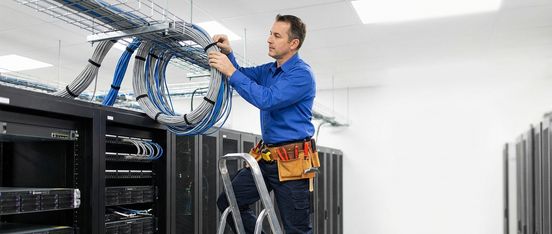
Modern businesses operate in a state of continuous digital expansion. Your daily operations rely heavily on seamless connectivity and robust data transfer capabilities. This growing reliance places unprecedented stress on your facility's physical infrastructure. You might notice intermittent network drops or power fluctuations during peak operational hours. These symptoms often indicate a mismatch between your digital ambitions and your physical electrical capacity. Addressing this gap requires a thorough examination of your existing power distribution systems. Upgrading your business network wiring is not just about adding new cables to a server rack. It requires a comprehensive approach to power management and infrastructure stability across your entire organization.
Your servers, switches, and wireless access points all demand clean and consistent electricity. When your underlying wiring cannot support these demands, your entire operation faces significant vulnerability. You risk unexpected downtime and potential hardware damage that can cripple your productivity. Recognizing these vulnerabilities early allows you to implement strategic improvements before catastrophic failures occur. The physical foundation of your network dictates the ultimate speed and reliability of your digital tools. You must treat your electrical infrastructure as a core component of your overall business strategy. Ignoring the physical limitations of your facility will inevitably stifle your technological growth.
Preparing your enterprise for heavier network demands involves meticulous planning and execution. You need to assess exactly how much power your current hardware consumes on a daily basis. You must also project your future energy needs based on your planned technological upgrades. This proactive mindset prevents you from constantly playing catch-up with your infrastructure requirements. A well-designed electrical backbone supports high-speed data transmission and protects your expensive IT investments. By prioritizing a robust physical environment, you ensure your network can handle intensive workloads without faltering. The following analysis details the necessary steps to secure your commercial wiring for advanced networking applications.
Evaluating Your Baseline Electrical Architecture
Every successful technological expansion begins with a clear understanding of your current physical constraints. Your facility was likely designed with a specific power load in mind. As you add more advanced networking equipment, you quickly approach or exceed these original design limits. Modern commercial data cabling requires an integrated approach to power delivery and spatial management. High-performance routers and switches draw significant continuous current to process massive amounts of data. You must evaluate whether your main service panels can handle this sustained load safely. A thorough audit of your electrical panels reveals exactly how much capacity remains for new installations.
Many older commercial spaces feature wiring that simply cannot support modern digital environments. You might find outdated breaker panels or inadequate circuit distribution throughout your building. These legacy systems struggle to provide the stable voltage required by sensitive networking hardware. Voltage drops can cause routers to reboot unexpectedly during high-traffic periods. They can also lead to data corruption during large file transfers between departments. You need to verify the exact capacity of each circuit dedicated to your IT infrastructure. Upgrading these specific circuits provides a solid foundation for your networking hardware.
A thorough baseline assessment involves mapping your entire electrical distribution network. You should identify which circuits power your server rooms and which support general office equipment. Mixing heavy mechanical loads with sensitive data equipment creates significant operational risks. Large motors or HVAC systems can introduce electrical noise into your shared circuits. This noise interferes with data transmission and degrades overall network performance. You must isolate your IT power sources to ensure maximum reliability and speed. Dedicated circuits prevent heavy machinery from disrupting your critical digital operations.
Consider the physical routing of your existing electrical pathways. Your conduits and cable trays might already be at maximum capacity. Adding new network lines requires careful spatial planning to avoid overcrowding. You must maintain appropriate physical separation between high-voltage power lines and low-voltage data cables. Failing to maintain this separation leads to severe electromagnetic interference. This interference slows down your network and frustrates your employees on a daily basis. Proper spatial planning ensures optimal performance for all your connected enterprise devices.
Identifying the Financial Impact of System Strain
Operating a modern business on an outdated electrical foundation introduces severe financial risks. Hardware failures stand out as the most immediate consequence of inadequate power delivery. Enterprise-grade networking equipment requires a significant financial investment to acquire and configure. When poor wiring delivers inconsistent voltage, the internal power supplies of these devices degrade rapidly. You will find yourself replacing expensive switches and firewalls far more often than anticipated. This constant replacement cycle drains your IT budget unnecessarily. Protecting your hardware with proper wiring yields a substantial return on investment.
Downtime represents an even greater financial threat to your daily operations. When your network goes offline due to a tripped breaker, your entire workforce stops producing. Every minute of lost connectivity translates directly into lost revenue and delayed project deliverables. You also face the hidden costs of missed opportunities and damaged client relationships. Customers expect your digital services to remain available at all times without exception. Frequent outages erode their trust in your brand and drive them toward your competitors. Reliable power delivery keeps your business online and your customers satisfied.
Inefficient electrical systems also inflate your monthly operational expenses significantly. Outdated wiring generates excess heat due to high electrical resistance within the cables. Your cooling systems must work harder to maintain safe temperatures in your server rooms. This compounding effect drives up your utility bills month after month. You end up paying for wasted energy rather than productive computing power. Upgrading your infrastructure eliminates these inefficiencies and reduces your long-term operating costs. A modernized system consumes energy efficiently and lowers your carbon footprint.
You must also consider the cost of emergency electrical repairs. When an overloaded circuit finally fails, it rarely happens at a convenient time for your business. You will likely need to hire professionals for emergency troubleshooting and urgent repairs. These urgent service calls carry premium price tags and disrupt your business operations for extended periods. Implementing a proactive electrical communications upgrade prevents these costly emergencies entirely. It allows you to schedule improvements during planned maintenance windows to minimize operational disruption.
Preparing Facilities for High-Density Networking
The shift toward high-density networking completely changes how you must approach facility power distribution. Modern office environments rely heavily on Power over Ethernet technology to streamline connectivity. This technology allows a single cable to provide both data connection and electrical power to remote devices. You use it for wireless access points, security cameras, and VoIP desktop phones. While highly convenient, this technology centralizes the power draw directly at your network switches. Your wiring closets now require substantially more power than they did a decade ago. You must supply these centralized hubs with robust and dedicated electrical circuits.
You must design your server rooms and wiring closets to handle this concentrated electrical demand. A single rack of high-density switches can draw thousands of watts of continuous power. You need dedicated, high-amperage circuits to support these equipment racks safely and consistently. Standard office wall outlets will not suffice for this volume of networking equipment. You must install specialized locking receptacles to prevent accidental disconnections by maintenance staff. These robust connections ensure your core network infrastructure remains online at all times.
Heat dissipation becomes a primary concern in high-density networking environments. As your equipment draws more power, it generates a corresponding amount of thermal exhaust. Your electrical design must account for the power requirements of dedicated precision cooling systems. You cannot rely on standard building air conditioning to cool a heavily populated server room. You need separate circuits to run these essential cooling units without overloading the main panels. If your cooling fails, your network equipment will quickly overheat and shut down automatically to prevent fires.
Redundancy forms the backbone of any high-density networking strategy. You cannot rely on a single source of power for your critical infrastructure. You must install uninterruptible power supplies to bridge the gap during brief utility outages. These heavy battery systems require their own dedicated high-capacity circuits to charge properly. You should also consider implementing backup generators for extended power failures in your region. Your electrical architecture must seamlessly transfer the load to these backup systems without interrupting active network traffic.
Maintaining Safety Standards During Expansion
Expanding your network capabilities must never come at the expense of facility safety. Electrical codes exist to protect your building and your employees from catastrophic hazards. As you add more power-hungry devices, you increase the risk of overloading your existing circuits. Overloaded circuits generate excessive heat within your walls and above your drop ceilings. This hidden heat buildup serves as a primary cause of commercial electrical fires. You must strictly adhere to all local and national safety regulations during any expansion project.
Proper grounding is a fundamental safety requirement for all commercial networking installations. Your IT equipment requires a flawless path to ground to dissipate static charges and electrical surges. An inadequate grounding system leaves your expensive hardware vulnerable to lightning strikes and grid fluctuations. It also creates a significant shock hazard for your IT staff during routine maintenance. You must have professionals verify the integrity of your building's grounding system regularly. This verification ensures complete protection for both your personnel and your technological investments.
You must carefully manage the physical installation of your new cabling infrastructure. Abandoned cables from previous network iterations pose a significant fire hazard in your ceiling spaces. You should remove these old cables entirely before installing new high-speed data lines. New installations must utilize appropriate plenum-rated cables in specific air-handling spaces within your building. These specialized cables resist burning and emit less toxic smoke during a fire event. Proper material selection is a non-negotiable aspect of a safe infrastructure upgrade.
Regular professional inspections help you maintain safety compliance as your network grows. You should not wait for a tripped breaker or a burning smell to investigate your electrical system. Routine thermal imaging can identify overheating connections before they fail completely. Proactive load testing ensures your circuits remain within safe operating parameters as you add new devices. These preventative measures protect your business from devastating fires and expensive regulatory fines. They provide complete peace of mind as you continue to scale your digital operations.
Structuring a Resilient Long-Term Power Strategy
Building a resilient business requires you to look beyond your immediate networking needs. You must anticipate how your technological requirements will evolve over the next decade. A modular approach to electrical design provides the flexibility you need for future growth. You should install larger conduits and higher-capacity panels than you currently require. This forward-thinking strategy prevents costly tear-outs and total system replacements down the road. It allows you to add new circuits quickly and efficiently as your company expands.
You need to establish clear documentation of your entire electrical and network infrastructure. Accurate panel schedules and wiring diagrams are essential for effective troubleshooting and future upgrades. When your IT team knows exactly which breaker controls which server rack, they can resolve issues much faster. You should mandate strict labeling protocols for all new installations and panel modifications. This organized approach minimizes confusion and reduces the risk of accidental power interruptions during routine maintenance. Comprehensive documentation serves as a roadmap for your future infrastructure projects.
Integrating smart power management systems offers significant advantages for long-term operational resilience. Intelligent power distribution units allow you to monitor power consumption at the individual receptacle. You can track exactly how much current each network switch draws in real time. This data helps you identify inefficiencies and predict potential overloads before they occur. You can also remotely power-cycle unresponsive equipment without sending a technician to the server room. These remote management capabilities dramatically improve your operational efficiency and response times.
A successful long-term strategy requires building strong relationships with qualified infrastructure partners. You need experts who understand the complex intersection of heavy electrical loads and sensitive data networks. These professionals can guide you through the complexities of planning and executing a massive facility upgrade. They help you balance performance requirements with safety regulations and strict budget constraints. By prioritizing a robust physical foundation, you ensure your network can handle whatever technological advancements the future brings. Your business remains agile, competitive, and fully prepared for tomorrow's digital demands.
Securing your digital infrastructure requires immediate and decisive attention to your physical electrical systems. You must stop treating power delivery as an afterthought in your networking strategy. A robust, meticulously designed wiring architecture protects your hardware investments and ensures continuous operational stability. By addressing these foundational vulnerabilities today, you position your enterprise to scale confidently without the constant threat of technical disruption. Your facility must be equipped to handle the rigorous demands of modern connectivity seamlessly.
Taking proactive steps to evaluate and reinforce your commercial wiring is a sound business decision. You need a comprehensive assessment to identify specific risks and map out a strategic path forward. For a personalized evaluation of your facility's current capacity and to discuss your specific infrastructure needs, reach out directly to jason@rh-electric.com. This direct consultation will provide you with the exact insights required to secure your operational future and maintain uninterrupted productivity.